

For nearly twenty years, the Keolis Group has been observing, analysing and anticipating changes in mobility through its lifestyle observatory, Keoscopie. This initiative documents evolving user patterns, territorial profiles and the specific challenges unique to each local community.

In this latest edition, Keolis reveals the insights from an international analysis of unprecedented scale, conducted in conjunction with the Toluna institute among 8,000 residents across 20 metropolitan areas and 11 countries.

The findings deliver a clear verdict: all over the world, citizens express the same fundamental expectations regarding public transport—more affordable, more frequent services and safer networks—yet their usage remains deeply shaped by their living contexts and local expectations.
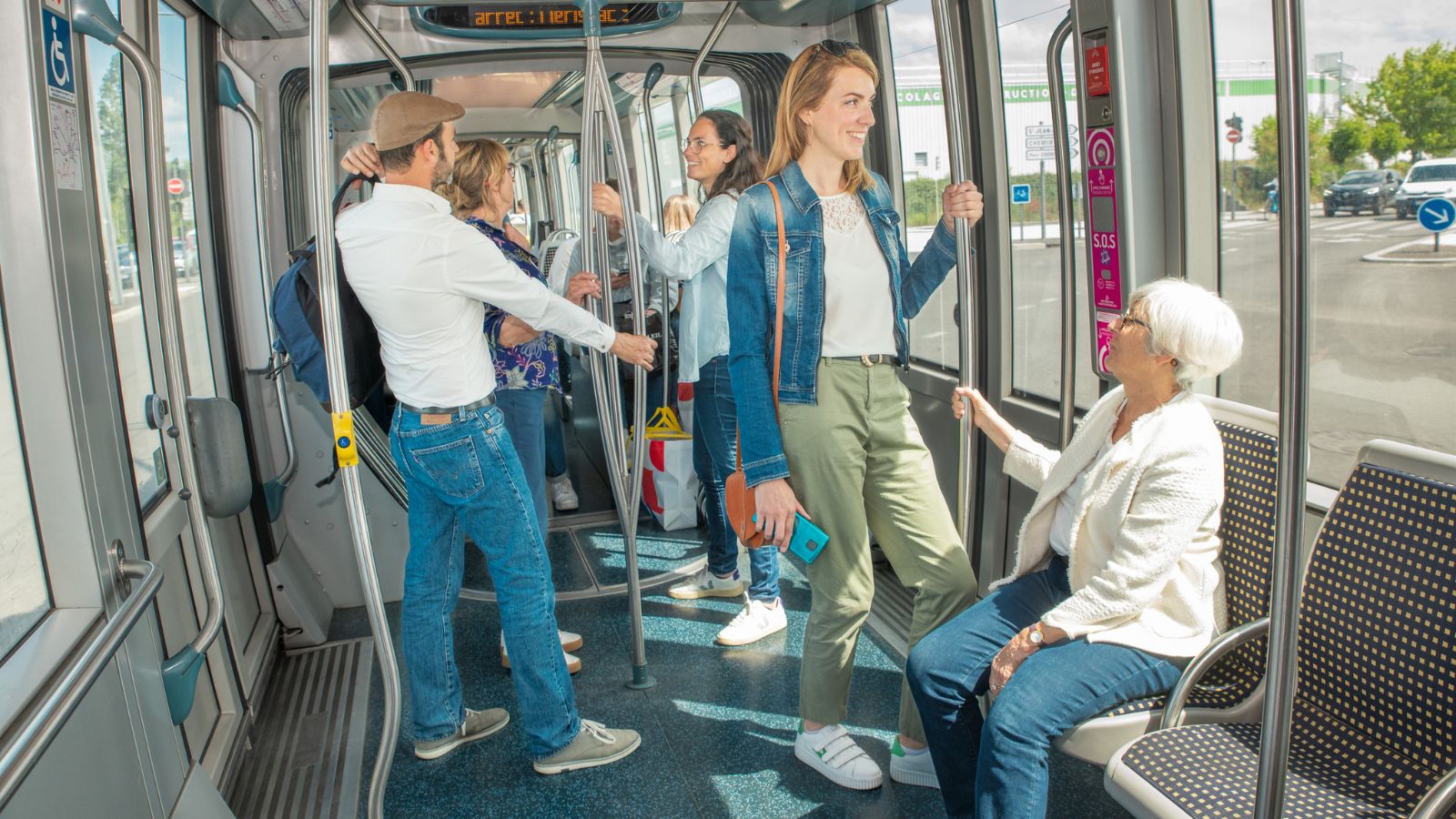
Shared aspirations in every community

From Sydney to Stockholm and from Montreal to Hyderabad, respondents share a common set of expectations for public transport, structured around three priorities:

  • More affordable transport

  • Enhanced services (increased frequency/coverage)

  • Increased safety on board and around networks

This convergence of views is noteworthy: in most of the countries studied, passengers prefer lower fares for everyone over entirely free transport, in the belief that service quality must remain the top priority.

Local specificities reshaping priorities

Beneath this apparent homogeneity, the study highlights major local differences linked to culture, mobility history and the urban fabric:

  • In North American and Australian metropolitan areas, where nearly 9 out of 10 passengers use a car several times a week, up to 30% of residents prioritise improving driving conditions and increasing the number of parking spaces.

  • Conversely, in Scandinavian cities such as Gothenburg or Stockholm, this requirement drops to 19%, with expectations focusing instead on the continuous improvement of public transport.

  • In Northern Europe, fare regulation and safety are structural concerns.

  • In South Asia, the need for services available across extensive operating hours, including weekends, proves particularly strong due to longer working schedules.

These contrasts serve as a reminder that the same transport service carries different implications from one continent to another: mobility is inherently local.

Fragmented working patterns that deeply affect patronage

The study shows that the "traditional" Monday-to-Friday working week is no longer the norm in most countries and regions:

  • Fewer than one in two workers follow this model.

  • In Hyderabad or Pune, a significant proportion of the workforce reports working 7 days a week.

  • On average, 40% worked at least one weekend day.

  • More than 70% started or finished their working day outside peak hours at least once during the week (Monday to Friday).

Mobility is now required continuously, all day long and throughout the week. Everywhere, there is one clear requirement: networks must remain attractive and accessible, even outside traditional peak hours.

A sense of insecurity that weighs on the travel experience

Safety emerges as a major issue, with varying degrees of intensity depending on the region studied:

  • On average, 8 out of 10 passengers have applied at least one avoidance strategy (altering a route, letting a loved one know before setting off, avoiding certain times, etc.).

  • The 18–24 age group, despite being the most frequent users, are also the most vulnerable: 94% report having implemented protective strategies at least once over the past 12 months.

  • In Boston, one in two residents has given up on making a journey over the past 12 months out of concerns for their safety.

  • In Brussels, 58% have already changed their route due to feeling unsafe.

These data points demonstrate that perception is just as decisive as objective reality, and that it varies significantly according to urban cultures.

Similar vulnerabilities, but tailored responses required

Certain difficulties are experienced everywhere:

  • 88% of passengers have had to stand during a journey at last once in the past year.

  • 76% have struggled to find their stop in an unfamiliar environment.

  • The absence of toilets at transport hubs emerges as a major irritant across all cultures, affecting both women and men, young and old alike.

Other vulnerabilities are more discreet—such as arthritis, anxiety and chronic conditions—and affect travelling to varying degrees depending on the region.

Global population ageing will make these issues even more critical in the coming years.

Added to this is a highly localised digital divide: while 83% overall believe that digital technology simplifies their travel, as many as 52% of people in Hyderabad state they have abandoned a journey due to a lack of digital literacy.

Three levers to build universal… and local mobility

The study identifies three areas of action applicable everywhere, but which must be tailored to the realities of each city.

Below are examples illustrating how Keolis deploys these levers across the networks it operates in France and around the world.

Lever 1 – Improving the customer experience by addressing common bugbears (Overcrowding, passenger information, essential amenities)

  • Besançon: Real-time and predictive information regarding bus and tram crowding for the coming days allows passengers to adjust their travel times and travel in comfort.

  • Hyderabad and Dubai: Artificial intelligence and crowd prediction are transforming metro operations to continuously adapt to passenger numbers, station by station. By reducing waiting times and improving onboard comfort, these technologies mark a turning point for urban mobility. Rider Predict, a tool developed by Keolis teams, demonstrates this advancement with a 96% prediction accuracy.

  • Bordeaux: Customer insights rely on a multichannel approach: listening tools, regular satisfaction surveys (7 surveys planned in 2025, complemented by over 15 ad-hoc thematic surveys), AI-assisted qualitative analysis, and monitoring feedback on social media, blogs, and press coverage. This integrated approach helps identify components of customer satisfaction, detect and correct friction points, and capture weak signals of shifting trends.

Lever 2 – Strengthening human presence. A genuine factor of reassurance, particularly during off-peak hours or at difficult connection hubs

  • Lille: Since 2012, an Information Command Centre (PCI) has provided continuous coverage of the Ilévia network, 7 days a week. A team of 17 agents continuously manages passenger information and handles calls from metro and tram help points. This system is also backed by an enhanced field presence, with more than 80 "Welkomers" deployed across the entire network.

  • London: The DLR Community Assist programme redefines the role of transport operators on the Docklands Light Railway (DLR). By accompanying vulnerable passengers, it helps them regain confidence and master independent travel. Through strong partnerships and close attention to the real needs of users, this initiative boosts public transport accessibility and fosters social inclusion within East London communities.

  • Manchester: To combat fare evasion more effectively, KeolisAmey Metrolink has increased the staff numbers and visibility of its revenue protection officers on the ground. Beyond the goal of reducing fare evasion, this extra personnel helps guide and reassure customers regarding the correct use of the network.

Lever 3 – Maintaining a continuously attractive service, adapted to profoundly changing daily routines

  • Châteauroux: At the SEMA (Autonomous Mobility Test Site), Keolis is currently finalising real-world trials of autonomous shuttles. From September, an eight-seater electric shuttle will run in the town centre, integrated into general traffic, with several departures per hour.

  • Almere: The allGo bus lines in Almere, Netherlands, begin running before 5:00 am on weekdays (slightly later at weekends) and operate until past midnight every day of the week. During the day, from Monday to Sunday inclusive, buses run at high frequencies (several times an hour) late into the evening, as well as early in the morning.

  • Orléans: Since 2025, the RésaNuit service has provided comprehensive coverage across the metropolitan area's 22 municipalities, every day from 9:30 pm to 6:00 am. This dynamic transport-on-demand service, unique in France, uses 9- and 20-seater vehicles and is accessible with standard network tickets or subscriptions.

  • Bourgoin-Jallieu: To meet the variable working hours of employees in the Chesnes logistics zone (the premier inland logistics hub in France and the third largest in Europe), the Flexibus and Ruban Nuit services complement regular lines. They provide detailed, tailored coverage 24 hours a day, from Monday to Saturday, benefiting a total of more than 360 companies within the Porte de l'Isère Conurbation Community.