On 15 October 2026, Frédéric Van Heems, Chairman and CEO of Keolis, unveiled EMBARK 2030, the Group’s 2027-2030 strategic plan designed to accelerate profitable growth.
By 2030, Keolis aims to achieve a Group net profit margin of 1.5% to fund its projects and innovation, a Lost Time Injury Frequency Rate (LTIFR) of 15 across the Group, employee engagement above 8.2/10, and customer satisfaction above 8/10.
To achieve these goals, the Group is focusing on four pillars: selective and profitable growth, reinforcing its multimodal expertise and innovation capabilities, improving performance and value creation, while making no compromises on what defines Keolis: safety, a people-centric corporate culture, and ethics.
Built on contributions from employees across the Group, the action plan is structured around eight Must-Win Battles (strategic priorities) designed to unlock Keolis’ full potential.
The organisation is based on a “gloKal” model, built around four geographical zones, a regionalised structure for France and more operational central teams, creating a simpler, more agile organisation that is closer to operations and customers.
Keolis is the pioneer and global leader in automated metro operations. Over the next 18 months, the Group will launch five new automated metro systems (greenfield projects) across three continents: Line 18, followed by Lines 16 and 17 of the Grand Paris Express, Line 3 in Pune (India), and the Abidjan Metro (Côte d’Ivoire), the first automated metro system in sub-Saharan Africa.
Keolis launches EMBARK 2030, its strategic plan to accelerate profitable growth
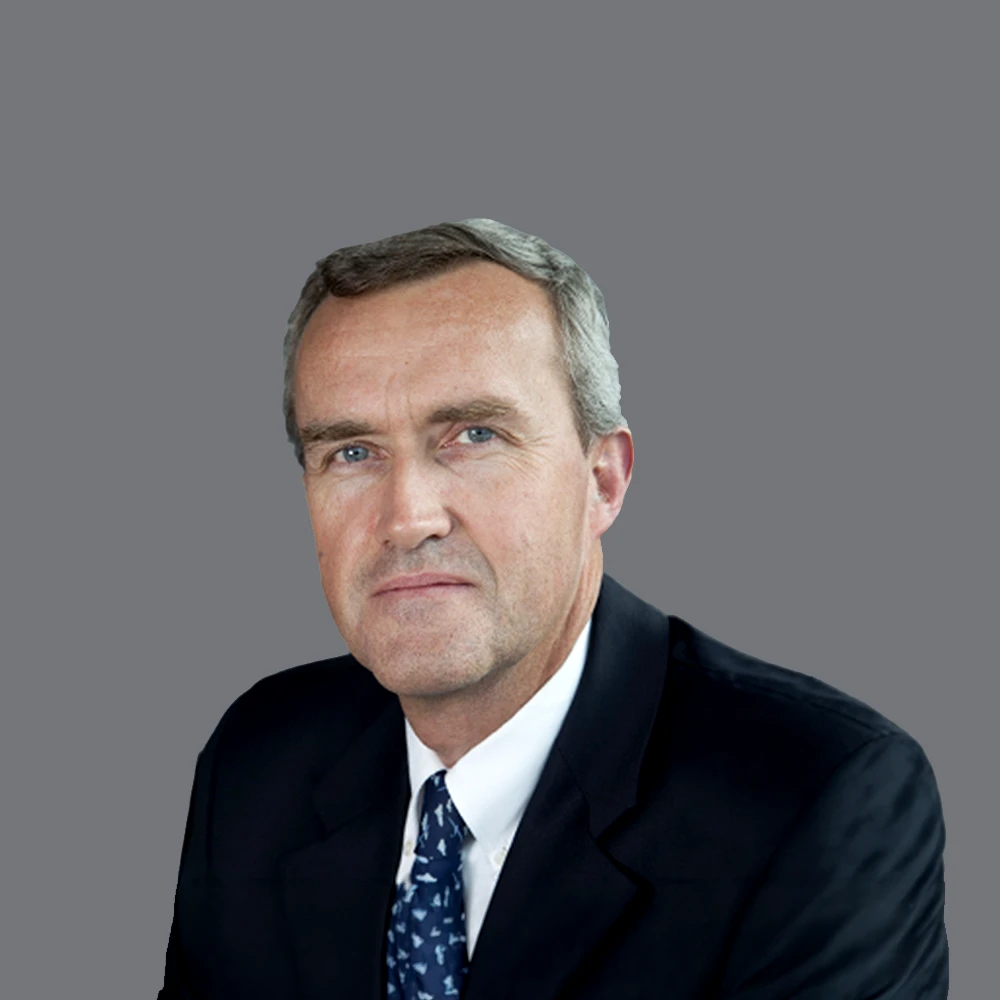
"Today marks a defining milestone for Keolis. We are launching EMBARK 2030, our strategic plan for 2027-2030. EMBARK 2030 comes at a time when everything is converging toward what we believe is a golden age of multimodality. Together with our people, customers and partners, we are embarking on a new phase of sustainable, profitable and responsible growth."
Frédéric Van Heems, Chairman & CEO of Keolis
The launch of EMBARK 2030 comes at a time when public transport is moving to the forefront of public policy and economic development. Population growth and ageing, urbanisation, climate urgency, rising energy costs, changing lifestyles and increasing expectations from society all reinforce the central role of public transport. More than ever, it is essential infrastructure that supports economic activity, territorial cohesion and social inclusion. This environment creates new growth and development opportunities for Keolis.
At the same time, transport authorities must decarbonise their networks, increase their infrastructure’s resilience to increasingly frequent climate-related hazards and meet evolving passenger expectations while operating under tighter budget constraints. In response to these challenges, models based on low prices are showing their limitations. Authorities are increasingly seeking partners that can integrate all modes of transport and technologies. Demand is growing, constraints are tightening and expectations are rising: multimodality is emerging as the answer.
From mass transit to bus networks: recognised multimodal leadership
In this respect, Keolis benefits from a strong market position and distinctive strengths. Established in 14 countries, the Group is the pioneer and global leader in automated metro operations, the world's leading tram operator and a reference figure in multimodal mobility.
Over the next 18 months, Keolis will launch five new automated metro operations (greenfield projects) across three continents: Line 18, followed by Lines 16 and 17 of the Grand Paris Express, Line 3 in Pune (India) and the Abidjan Metro (Côte d’Ivoire), the first automated metro in sub-Saharan Africa. Keolis also operates more than 2,000 electric buses and coaches and has developed expertise in autonomous mobility through partnerships, notably with Urbanloop, and through the Mach 2 project, which is scheduled to launch in Châteauroux between now and the end of 2026.
In France, Keolis has strengthened its position in several major transport networks in recent years. The upcoming launch of Grand Paris Express Line 18, followed by Lines 16 and 17, further reinforces its position in the Île-de-France region, where it holds a 25% market share. Another standout achievement is the award of a new seven year Envibus operating contract in the greater Sophia Antipolis area (Alpes-Maritimes).
Outside France, Keolis has entered the Irish market by taking over the operation and maintenance of Dublin’s Luas tram network, marking the beginning of a new chapter in a fourteenth country. In rail, the Group recently launched passenger operations through its joint venture Etihad Rail Mobility on the Abu Dhabi-Dubai corridor and opened a regional hub in the Middle East to accelerate growth in the region. New opportunities are emerging in high-speed rail in Canada (ALTO), the United States (California) and Australia (BOMA), in partnership with SNCF.
To continue strengthening its market position, investing, innovating and creating value for customers, passengers and local communities, Keolis intends to further improve performance, simplify its organisation, increase agility and improve execution. This is the purpose of the EMBARK 2030 strategic plan.
EMBARK 2030: a strategic plan to accelerate profitable growth
EMBARK 2030 is designed to accelerate and consolidate Keolis’ position as a leader in multimodal mobility by 2030. The plan will sustainably strengthen the Group’s impact, competitiveness and investment capacity, supported by a balanced and robust public-private shareholder structure consisting of SNCF and La Caisse.
"By 2030, Keolis will be recognized as the most caring, innovative and trusted worldwide leader, delivering safe, reliable and attractive multimodal mobility services that communities love and that we are proud of. To achieve this, we will leverage strategic partnerships, smart digital solutions and recognized expertise across all transport modes, from mass transit, high-speed rail and electro-mobility to on-demand transport and autonomous mobility. We will pursue operational excellence while delivering sustainable, profitable growth. Above all, we will continue to nurture a human-centric culture to grow our highly passionate and talented teams and partner with PTAs to provide an outstanding passenger experience and protect the planet."
To achieve this ambition, Keolis is focusing on four strategic pillars:
Selective growth, limited to geographical regions where its expertise, partnerships and value-creation capabilities provide strong competitive positioning;
Differentiation through its multimodal expertise and innovation capabilities, supported by artificial intelligence and its centres of excellence;
Value creation for customers, performance improvement and reliable contract execution;
A non-negotiable commitment to safety, a people-centric corporate culture and ethics.
By 2030, these ambitions will translate into measurable outcomes, starting with a 1.5% Group net profit margin. This objective is based on a strong conviction: performance and profitable growth are essential to Keolis' ability to innovate, deliver high-quality service, achieve operational excellence, guarantee the safety of passengers and employees, and provide motivating working environments for its teams.
These results and the Group’s investment capacity are expected to support three additional objectives:
A Lost Time Injury Frequency Rate (LTIFR) of 15 across the Group (25 in France);
Employee engagement above 8.2/10;
Customer satisfaction above 8/10.
A transformation serving customers and Keolis teams
To turn this ambition into reality and achieve these objectives, Keolis is engaging in eight Must-Win Battles (strategic priorities) designed to deliver profitable, value-creating growth while transforming its operating methods to unlock the Group’s full potential through a simpler, more agile organisation, closer to operations and customers.
#1
Achieve a step-change in safety and security culture and performance by embedding it in leadership, behaviours and operating routines.
#2
Win new mass-transit and multimodal references by strengthening our capabilities, innovating and differentiating our offers through “Keolize”.
#3
Amplify Keolis’ capabilities by leveraging the SNCF Group and strategic win-win partnerships.
#4
Make M&A a major growth driver by building a strong opportunity pipeline, executing value-accretive acquisitions and developing best-in-class integration capabilities.
#5
Secure contract execution and performance through common standards, greater leverage of Group procurement and a strong focus on underperforming contracts.
#6
Transform the way we work through technology and AI, notably through five key initiatives: passenger information, field staff assistance, predictive maintenance, operations optimisation, and a shared, secure AI platform.
#7
Foster joy and a winning spirit across our teams while creating growth opportunities for empowered and passionate employees.
#8
Deploy a scalable, growth-oriented gloKal operating model that combines global expertise with local relevance while simplifying our organisation.
EMBARK 2030 provides a common framework for action across the entire Group. It builds on what makes Keolis unique: its people, multimodal expertise, innovative capacity and commitment to safe, reliable and attractive mobility.
The gloKal model is based on four geographical zones, including a regionalised organisation in France, combined with more operational central teams that place their expertise at the service of local operations. With fewer management layers and more common standards, the organisation becomes simpler, more agile and closer to the field, built on trust, accountability, subsidiarity and collaboration.